

Bio-diversity of the forest refers to the entire ecosystem of forests including the plants, trees, wildlife, humans, insects and even the molds, bacteria, mycelium or mushroom life. These living creatures are all interconnected in balanced way that is like “sustainability armor” in a well managed forest ecosystem like you see in some Eco-Preserves and National Parks.
Wildlife and Humans depend on the plants and trees to get their dense nutrition and therapeutic vitamins and phytonutrients. If the forests are composed of only fast growing conifers or one type of tree then the rest of the system begins to decline in direct proportion to the loss of species diversity.

Less species diversity means less wildlife and human carrying capacity of the normally food-rich forest!
DANGER ON THE ROADS! – Ever wonder why you see so many Deer, Racoons, Possums, Porcupines, Coyotes, Squirrells, Chipmunks, Rabbits, and other wildlife dead along the roadways? A HUGE contributing factor to all of these roadkill deaths is for 2 simple reasons:
- Roads Get Sunlight – Nearly all of the remaining plant diversity that wildlife requires for survival is now mostly found in any usefull quantity along roads. Competition for light is extreme because the commercial forest just off the road is planted with a Single Type of fast growing conifer planted at 5′ spacing per stem. This mono-culture timber farming approach while being very productive for timber, it is unfortunately out competing all of the other forest trees, shrubs, grasses, and herbs.
- People Drive Too Fast – The other obvious reason is that there are many “Humans that Drive Too Fast” in order to stop, or react in time when the wildlife becomes frightened and runs into the road. On small curving forest roadways the maximum speed most cars can stop in time for wildlife jumping into the road is usually between 30-35 miles per hour, if you are alert and have good brakes.
These wild animals are foraging on the only remaining tiny strip of plant nutrition left for them, and it makes these tiny roadside plant preserves for natural plants and nutrition, a Death Trap for wildlife!
These animals would much rather not be facing danger everyday just to get the herbs and nutrition that they “Must Find” in order to survive and reproduce. There is currently no working system in place to replace the plant and eco-system diversity that is needed for our magnificant and beautiful furry friends.

One Huge concern Forest Ecologists and Foresters have is that with all the trees being planted with the one chosen fast growing timber species is “what happens when that species gets targeted in critical way by a pest or other disease?” The answer to that question has been played out right in front of humanities eyes while we watched the death of Pine Trees in Colorado due to the Western Pine Beetle taking advantage of drought conditions. This led to Catastriphic Species Die-Outs that decimated entire mono-culture forests leaving behind only grim grey skeleton of once beautiful forests as far as the eye can see! We also just witnessed the Western Hemlock Tree get nearly completely decimated in the Pacific Northwest by a Japanese Rust Disease, that has left huge heritage trees standing like giant dead sentinals professing the fragility and consequences of the mono-culture forest.

Some bugs kill trees but does that mean we so should we kill off all of those bugs by spraying pesticides to favor commercial tree survival while ? Most people would agree that is a very one sided solution to a very multidimentional problem. The fact is mono-culture forestry doesnt work to keep the forest in a wildlife sustaining state. Foresters now see that it increases forest ecosystem frigility leading to more commercial interventions that add more to the degradation of forests overall health and bio-diversity.

No Blame Game Here! – At Natures Partners we come from a well informed but “Practical Can Do” frame of reference. Were not blaming the commercial timber companies for doing what has been considered state of the art and their stock holders demanded and that is to “Make a Good Profit” or get fired. Being a forester myself, I have often contemplated that there were adjustments needed but it seems “the market made the rules” despite foresters objections for the last 40 or so years.
Taking Responsibility! – Instead we “Good Stewards of the Forest” are taking on the responsibility to make “Positive and Impactful Progress” in our Treasured Wild Places by organizing, securing funding and executing projects for community based forest restoration. We will be practical to get the most good work done with our available time, labor, and budget. This means we will be doing forest restoration in the best local forest areas that we can have access to. This progress is incremental but powerful, and will continue for many years to come as we “Put the Food Back Into the Forest!”

We Partner with Nature by Partnering with the Local Community as Humans Restoring Nature!
- Re-Plant heirloom nutrient rich plants and medicinal herbs critical for wildlife health
- Partner with the Local Community to organise teams of great people willing to help
- Engage with Local Businesses and showcase their commitment to local Nature and Wildlife
- Restore the trails, logging roads, meadows, streams and other places that will enhance heritage plant survival and provide sunlight when needed.
- Geo-Cache the locations of restored plants so team members can nurture them until established
- Create a community participation template that can be replicated to cover more forest areas
- Compare and contrast the effectiveness of practical forest restoration planting programs against the backdrop high tech unproven solutions using units of measure we can all agree to
- Avoiding restoration concepts that may see meager restoration benefits, while consuming huge green project budgets and causing public distrust of existing policies.
- Teach children to engage with the forest as “Good Stewards” and protectors of Nature and Wild Places
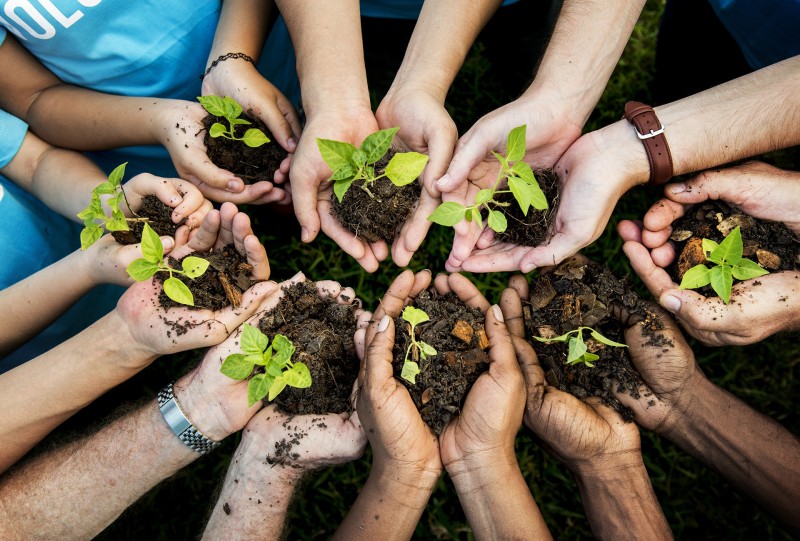
What we want to do is simple and effective, and we will be the model for “Humans Restoring Nature!”
